
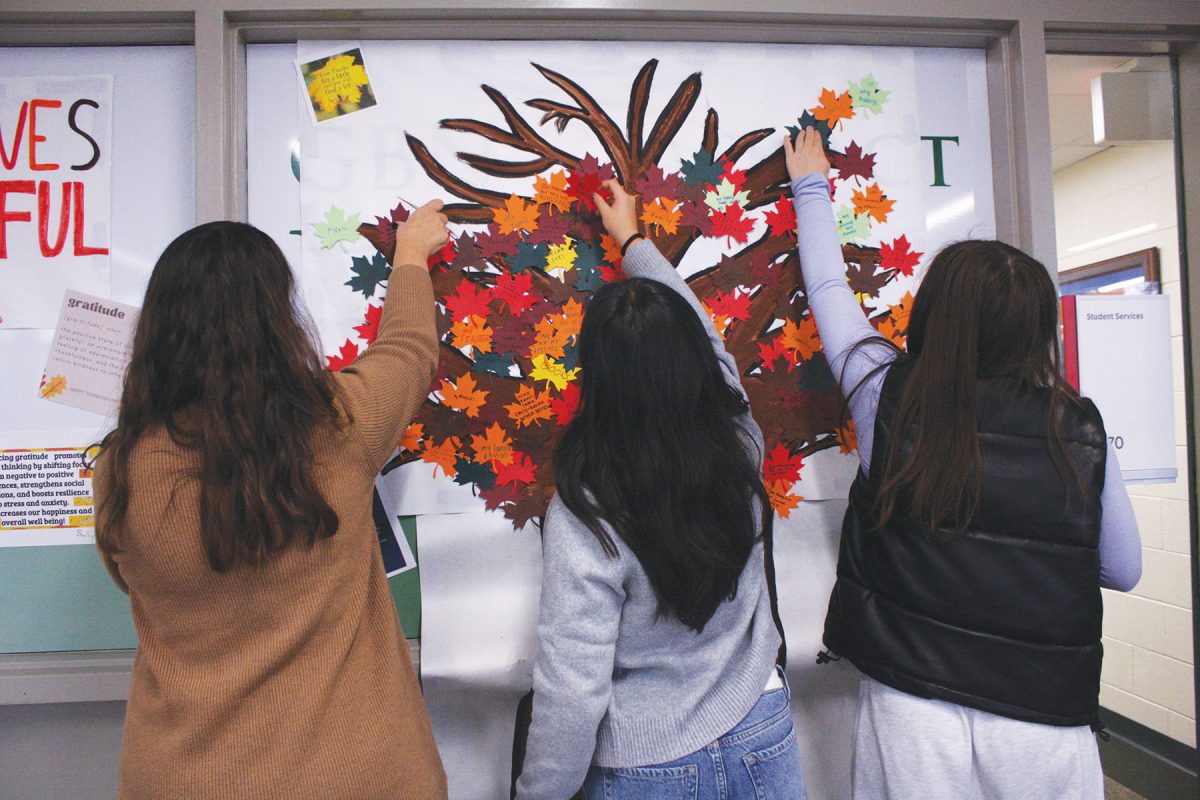
As winter finals approach, Lilian Huang, Mind Matters club co-president, notices how seasonal weather changes weigh on her.
“It’s getting very tough, having to wake up to [winter’s] dark, gloomy mood and then having to drag yourself to this cyclic routine where you’re just bombarded with work instead of having time to do things you actually enjoy doing,” Huang said.
According to Steven Wengel, geriatric psychiatrist at the University of Nebraska Medical Center, seasonal affective disorder, also known as SAD, is a condition in which people who have it typically feel more depressed during the fall and winter.
“[People] oftentimes find that they have other symptoms, like they sleep too much, and they often overeat during that period and crave carbohydrates,” said Wengel. “There are some other symptoms of depression that go with it, like poor concentration and loss of interest in activities. People are just not interested in socializing or their hobbies.”
According to Cyntoya Campbell, assistant professor of clinical psychology at the University of Illinois Chicago, SAD correlates with weather changes and the amount of sunlight people receive.
“If we’re not consuming enough vitamin D, and we get a lot from sunlight, it does definitely have some impacts on a lot of people,” said Campbell.
According to Wengel, the symptoms of SAD differ from conventional depressive disorder as SAD causes overeating and oversleeping, whereas major depressive disorder often causes lower than usual appetite and trouble sleeping.
“Whether it’s major depressive disorder or whether it’s seasonal affective disorder, one of the theories of depression is that when we’re in that condition, we are not producing enough serotonin into our brains, which is one of the major neurotransmitters,” said Wengel. “Most antidepressants work by increasing the amount of serotonin in the brain.”
To reduce the impact of symptoms of SAD, it’s important to have consistent routines of sleep, exercise and socialization, Wengel said.
According to Campbell, SAD is not something teenagers are frequently taught to be aware of due to their schedules and focus areas, so it can be overlooked by them.
“Students are pretty much inside a lot, and by the time that they get out of school, it may be very dark [outside] for them,” Campbell said.
According to Vivian Majewski, event manager for Mind Matters, the club hosts various initiatives to advocate for positive mental health among students, including events alleviating stress from school or themed around holidays.
“Our goal is to promote mental health awareness and try to decrease its harmful effects the best we can, especially because this is a very competitive and stressful school to be in,” said Majewski. “So just anything to uplift people and teach them about ways to cope.”