
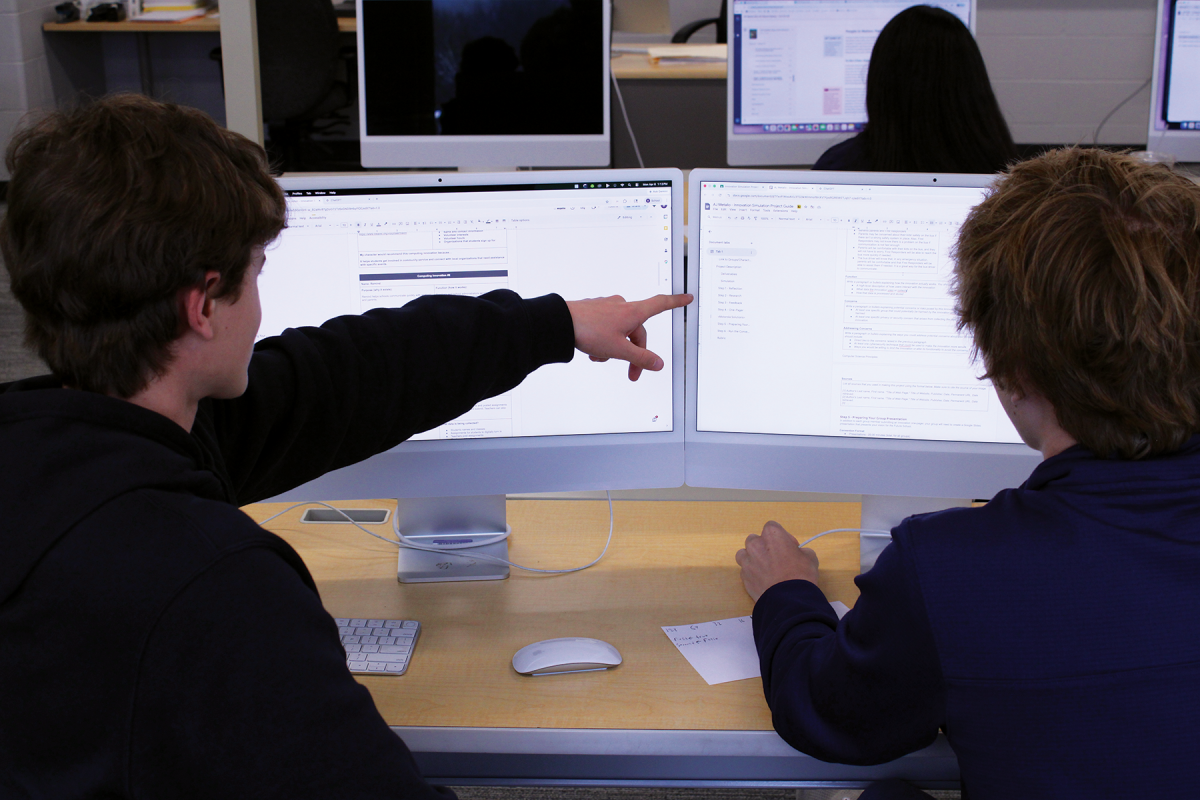
A new icon appeared on students’ computer browsers, signaling the start of a district pilot program in which 65 teachers are testing three device monitoring platforms — GoGuardian, Securly and Hāpara. These platforms enable teachers to supervise student online activity during class.
The two biggest reasons for implementing the pilot program were to manage AI and social media usage on Chromebooks, said Ryan Manly, senior manager of technology services.
The platforms can access devices that are signed into Chrome through a Glenbrook Gmail account and connected to the school network between 7:15 a.m. and 3:15 p.m. on weekdays. Both school-issued Chromebooks and personal devices can be monitored using the platforms.
“I feel that these programs are definitely beneficial for keeping kids on task, but I feel that they could also create more of a supervision and a ‘you’re being watched’ atmosphere rather than trust,” junior Jack Miles said.
According to physics teacher John Nichols, who is participating in the pilot program, while some students may not want teachers viewing their screens, the monitoring is not really any different from a teacher observing from the back of the classroom.
“If there’s something that you’re worried about somebody potentially seeing, you shouldn’t be doing it on the school’s network at all,” Nichols said.
All three platforms, tested for four weeks each, allow teachers to view students’ screens, open, close and block websites, privately chat with students and broadcast their own screen to the class.
“The main [feature I use] is checking to see if people are staying on task,” said Nichols. “And then, if students are not, I’ll often just send a message that says, ‘Hey, let’s close the computer.’”
According to junior Chandini Shah, the device monitoring pilot program is forcing students to act more responsibly with their computers, so now that teachers have the ability to use the platforms, the program will be helpful in the long term.
Manly intends to collect feedback from participating teachers about each platform after its four-week testing period. The district plans to implement the chosen platform at the start of the 2026-2027 school year.
“I think the whole reason that the school is trying to put this together is because we’re trying…[to] educate the students that are here, and that the more present students are every day in the classroom, the easier it is for them to learn and the better we can do our jobs,” Nichols said.