
Low literacy costs the U.S. economy an estimated 2.2 trillion dollars each year in lost productivity.
Literacy is the ability to read and write with proficiency, said Sarah Sayko, interim director for the National Center on Improving Literacy.
Comprehension is one area that is important to proficient reading, Sayko said.
“So the reader needs to not only make sense of the words on the page and read those words accurately and quickly, but they also need to get the meaning out of words, connect words in a sentence and understand complex sentences,” Sayko said.
“According to a Gallup report, adults with low literacy proficiency earn substantially less on average because they are often limited to lower-productivity jobs, have fewer educational opportunities and contribute less to innovation, entrepreneurship and economic growth,” said Sayko. “This can be costly for the U.S. because 54 percent of adults … fall below minimum literacy proficiency, which can decrease the national economic output.”
The National Assessment of Educational Progress, also known as the NAEP, is often referred to as “The Nation’s Report Card.” It is made up of a collection of assessments in multiple subject areas — reading, mathematics, science, history and civics — and is designed to measure how students across the country perform in these areas.
Twelfth grade reading scores are lower than any time in the past 33 years, said Carol Jago, former president of the National Council of Teachers of English.
“In reading, only 35 percent of 12th graders are considered academically prepared, and this is down from 37 percent in 2019,” Jago said.
According to Mark White, state representative of the Tennessee General Assembly and chair of the House Chamber Education Committee, the pandemic brought awareness to declining student proficiency in reading and math.
Around 2010, reading and math proficiency started to decrease and continued to go down until 2020, when COVID hit, and then it dropped out, White said.
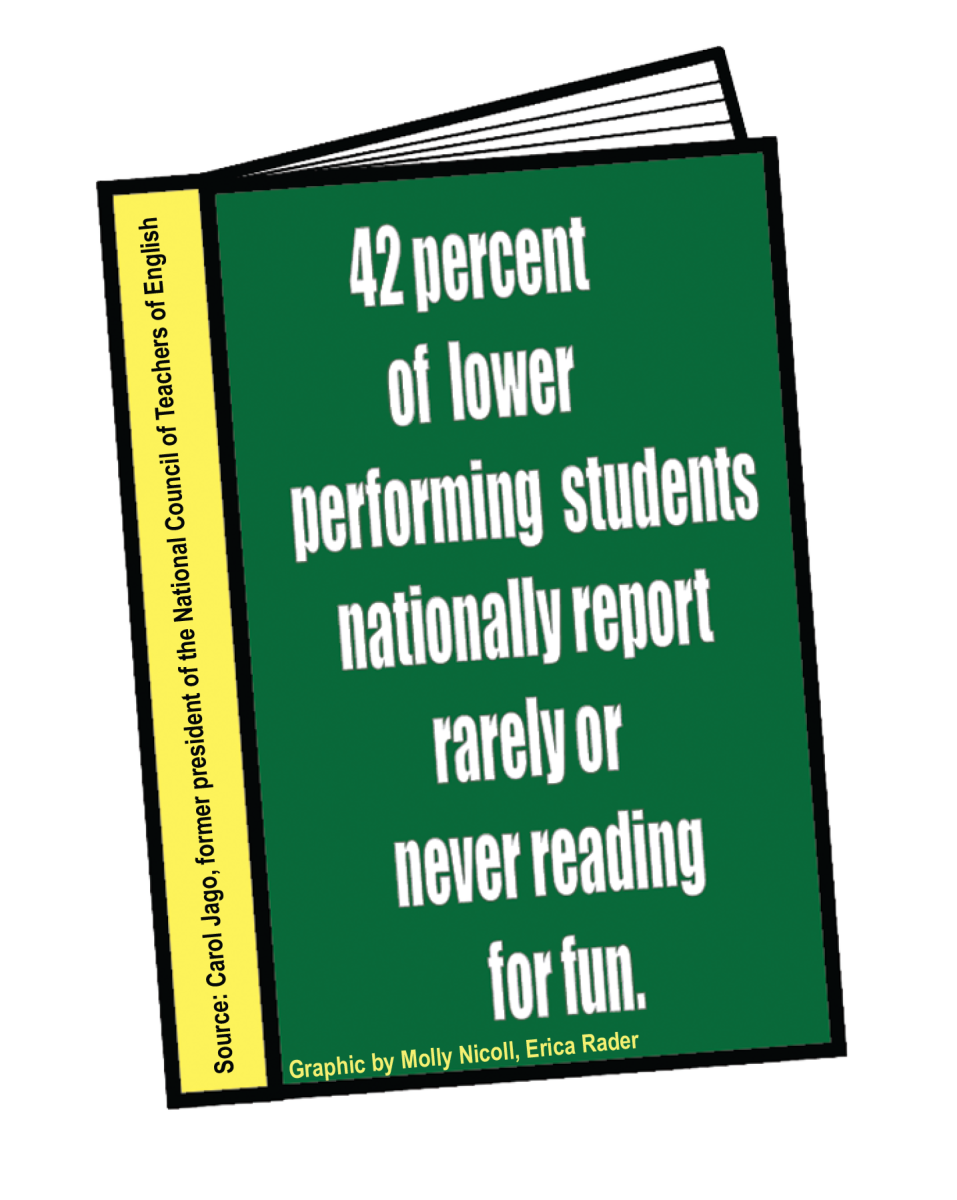
According to Jago, the NAEP also conducts a short survey asking students questions like, “How often do you read for pleasure?,” and 42 percent of lower performing students report rarely or never reading for fun.
“We will raise our reading scores when we get kids reading for enjoyment,” Jago said.
Senior Allison Sung said she continues to feel motivated to read because she finds the books she reads entertaining.
“I feel like you get something out of [reading], whether it be like a new perspective of things, a new meaning or a character that you really like,” said Sung. “I feel like I always take something with me when I’m done with a book.”
According to Jago, the most dramatic consequence of declining literacy is that we do not understand each other, that we live in bubbles and only talk to people that agree with the things that we agree with, and books and stories introduce you to people you never would otherwise meet.
Sayko recommends that people read books, articles, magazines or any type of text on a topic they are interested in so they can see the value and excitement in reading.
According to English teacher David Dolnick, Glenbrook North English classes have been exploring “choice reading” across grade levels.
“I think an important thing is sometimes people think they don’t like to read because they’ve only read what they’ve been assigned,” Dolnick said.
Sung has benefited from reading in her free time.
“[Reading] has definitely expanded my vocabulary, lengthened my attention span [and] improved my reading comprehension abilities and my writing skills,” Sung said.