
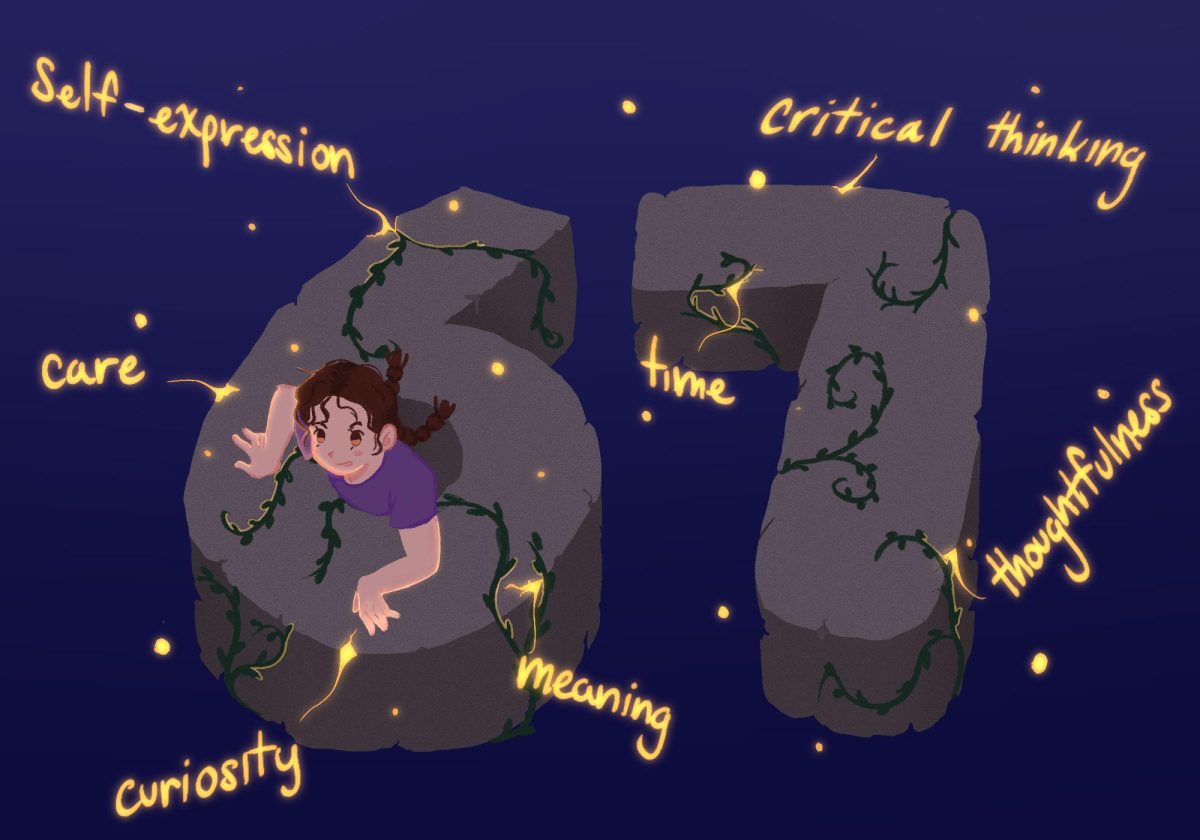
The word of the year isn’t a word at all. It’s a shrug.
Dictionary.com crowned “6-7,” a slang term from a viral rap song, the 2025 Word of the Year. It’s meant to mean “so-so,” often paired with a shrug-like gesture: palms up, alternating up and down. But perhaps the most nonsensical thing about “6-7” is that it doesn’t really mean anything at all.
It’s fitting that the word of the year means nothing.
Scrolling through social media, I can’t escape the “6-7” epidemic. My friend captions a photo “6-7.” Someone comments “6-7” under a story covering climate change. Even when watching a video about the government shutdown in class, I’m bound to hear “6-7.” The use of the phrase started as a joke, but now it’s a default response, an easy way to sound unbothered. The problem is “6-7” doesn’t just describe indifference. It breeds it.
“6-7” is a sign of social media eroding how we think and communicate. Words online spread fast and die faster, and slang is the most short-lived. A term trends, becomes ironic and burns out before most people even understand it. This speed doesn’t just tire us out in the constant churn of new terminology. It hollows out meaning. When words are disposable, thought becomes optional.
I’m constantly surrounded by this kind of fleeting language. I love the way a perfectly timed “Let. Me. Cook.” or “Slay QUEEN!” brings flair to a plain message. Yet I’ve also noticed how these microbursts in communication often replace, rather than embrace, deeper thought and expression. Comments pile up, likes accumulate and the true meaning behind our messages dissolves into an indistinguishable hum of recycled words.
I’ve realized the problem isn’t the slang itself but what it reveals. We’re fluent in quickness. We know how to reply instantly, summarize emotions in three letters and joke without feeling. It’s no surprise students settle for filler words even outside social media. We don’t lack ideas. We just don’t take time to name them. Every sentence feels like a sprint. Every pause feels like an invitation for interruption.
“You know what I mean?”
But half the time, we don’t. Slang is a safety net when clarity feels out of reach, letting us move on without sitting in confusion or explaining what we actually want to say.
Dictionary.com’s choice is off. “6-7” celebrates our collective shrug, suggesting the defining mood of the year is apathy, and that’s not worth celebrating. If language mirrors culture, then “6-7” reflects one that’s learned to coast. We stay neutral because it’s easier and because precision takes effort. But precision matters. Without it, thinking gets lazy.
Even if it sounds awkward, ask what others mean instead of pretending to know. When the next catchy phrase floods your feed, think before repeating it. Clarity and true connection outlast trendiness.
We can’t control trends, but we can control how much meaning we give away to them. “6-7” may have been crowned Word of the Year, but it doesn’t deserve the title. Dethrone it. Reward language that says something and shows curiosity, honesty and thought. Because if we keep talking like nothing matters, eventually nothing will.