
I’ve never been much of a texter.
Not because I don’t respond, but because texting feels incomplete when shaped by constant updates and quick check-ins that circle the same questions: “How have things been?” and “What’s new?” The honest answer is usually too long, too complicated or too unfinished to fit into a few texts.
Give me a call and the conversation will actually go somewhere. Stories overlap and wander, and more gets said without anyone trying to summarize their life on the spot or edit it into something more appealing.
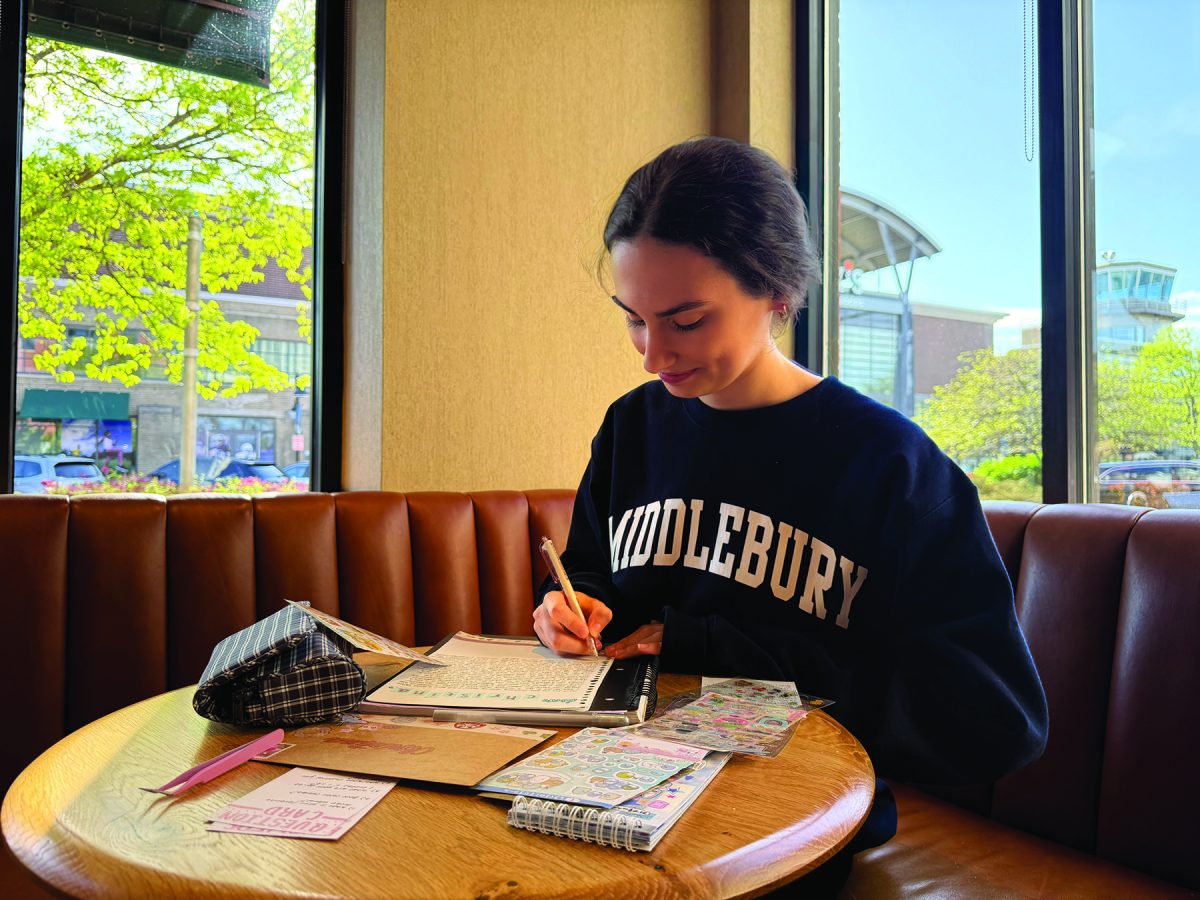
But the biggest shift in how I think about staying connected didn’t come from my somewhat complicated relationship with online communication. It came from writing letters.
I made my first pen pal at an overnight summer camp when I was 10. Our letters were exactly what you’d expect from two preteen girls: covered in Lisa Frank stickers, school updates, book opinions and dramatic cutouts of whatever crush felt life-defining that week. Every so often, an envelope would appear in my mailbox and I’d rush to my room, wide-eyed, to read it.
That part hasn’t changed. What has changed is who those letters come from.
My pen pals now span various ages and experiences. Some pen pals are close to my age, others much older, all living lives I could never experience. Through them, I’ve learned that people, characterized by their handwriting, phrasing and what they choose to share, notice different things, value different moments and tell stories in completely different ways.
Writing letters slows everything down. It takes time to sit and think, so my pen pals and I prioritize authenticity. Once something is written, it’s sent. There’s no unsending a sentence or editing it into something safer. If all conversationsworked that way, there would probablybelessoverthinking and more honesty — simplysaying something as it is and trusting it will be well received.
Conversations don’t have to be long to be meaningful. They just have to be intentional and not plagued by phrases that only fill space. I used to feel guilty for being the person who doesn’t text as often until I realized staying connected just requires attention. Connection isn’t built on how often people talk, but on how much attention is given when they do.
Thoughattention is central to the process of writing letters, I also find love in the wait for each letter to appear in my mailbox, the stickers and stationery, the excuse to use the pens I keep buying. It’s satisfying to make each letter feel personal, like picking a theme based on a pen pal’s favorite color. When the process starts to feel like it has to be perfect, I step back and recognize that snail mail is more about taking the time to sustain the exchange.
In the coming days, “stay in touch” is likely to be the most commonly used phrase. But instead of turning to pressured, quick check-ins that rarely go deeper than “We should catch up soon,” it’s worth remembering what staying in touch truly means. It means choosing to give someone your full attention. Whether that looks like a call, a coffee date when back in town, a real conversation that isn’t rushed or reduced to a small update.
I’m not promising to text more. I’m promising to make it matter when I do.