
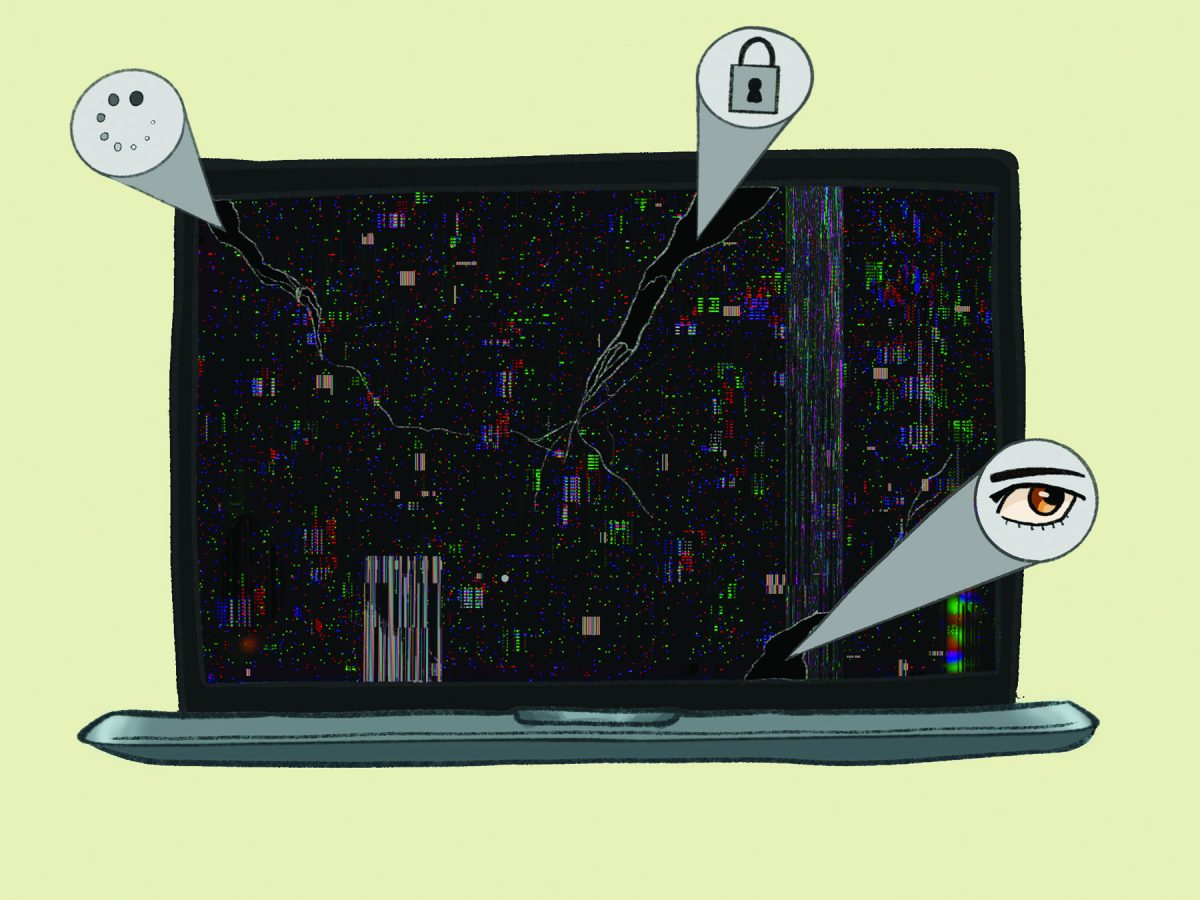
A student browses the Torch website looking for background information on a research project. She attempts to click into an old article about TikTok, only to be met with a blocked screen. Access denied. Down the hall, another student is scrolling through the Common Application. He tries to follow a link to a recommended merit scholarship, but finds a blocked screen. Access denied. Across the building, a teacher assigns a website for homework, unaware she is about to receive countless emails from students who cannot view it on their school-issued Chromebooks. Access denied.
Students have begun to grow frustrated following the introduction of GoGuardian, meant to block unapproved websites and monitor student activity. Its content filter primarily blocks websites based on categories like social media and gaming. But based on student experience, it seems as though GoGuardian has inadvertently prevented many from accessing valuable resources such as New York Times articles or educational YouTube videos. Chrome extensions are blocked, even those allowing offline access to Google Drive materials. Students have also noticed their Chromebooks functioning more slowly than last year, leading many to speculate whether the new GoGuardian software is a contributing factor.
Implementing GoGuardian is well-intentioned and can be used to prevent academic dishonesty and keep students focused in class. But the unfortunate reality is that students cannot appreciate the benefits provided by GoGuardian when those upsides become overshadowed by these aforementioned problems.
The impacts of the new software can make it difficult to draw the line between blocking distractions and outright blocking information.
We do not have a problem with the district’s goal of limiting distractions. In fact, we applaud the administration for trying to improve the learning environment. The problem arises when these limitations interfere with students’ ability to access the resources they need. Students should not have to spend time in class trying to find alternative sources because the most relevant one is inaccessible and teachers should not have to worry whether students can open the necessary materials for class. When students are unable to reach informational websites, GoGuardian may begin to create more distractions than it does solutions.
Students’ experiences with this new software raise an important question: At what point do restrictions create more problems than they solve?
We urge policymakers to take students’ experiences into consideration and reassess how to improve the monitoring system to better serve everyone. The previously blocked Torch article about TikTok was recently made accessible, which is one way the filters seem to be modified to better suit the needs of the students. We hope that as we continue to adjust to the new software, the filters can adjust to better fit our needs.